Explain Technical Features Without Inventing Product Claims
Turn specifications into useful buying information by separating documented facts, supported capabilities and the reader’s use case.
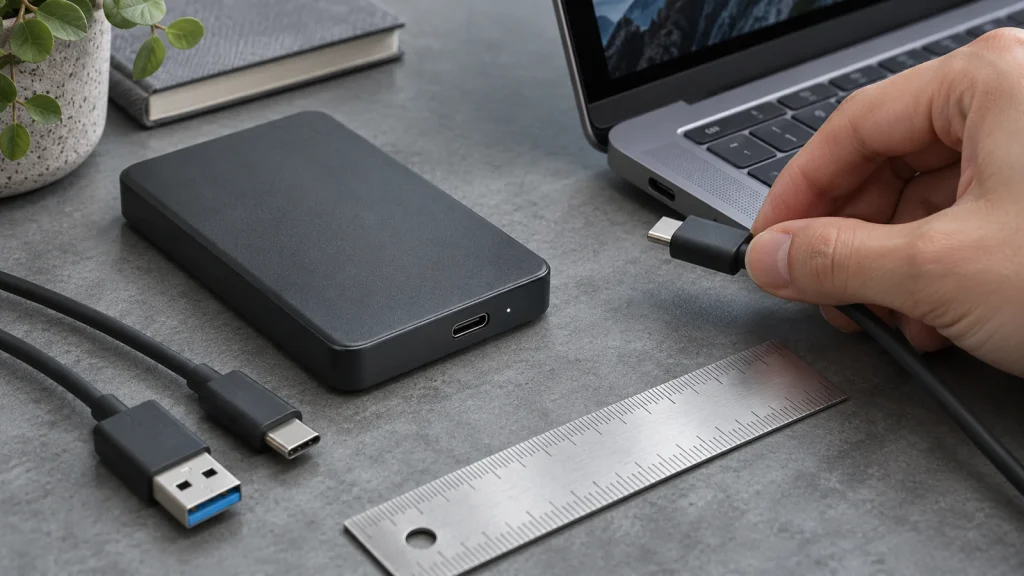
A technical specification can be accurate and still leave a buyer unsure what to do with it. Capacity, interfaces, dimensions and compatibility matter only when the reader can relate them to a job, a constraint or a choice.
Explaining that relationship is different from upgrading the specification into a promise. Good product copy keeps the factual trail visible while helping someone evaluate fit. Here is a practical way to do both.
Keep the source beside the sentence
Start with the current manufacturer documentation or another reliable product source. Record the exact specification, its conditions and any important exclusions. A convenient summary is not a substitute for checking whether a claim belongs to this model or version.
Separate what you know from what you infer. “Includes an Ethernet port” is a product fact if documented. “Lets you connect through a wired network” describes a capability. “Eliminates connection problems” is a much broader outcome and does not follow from the port alone.
This distinction lets you explain usefulness without borrowing certainty from a number or technical term.
Choose one real buying question
Ask what the reader is trying to check. Will the item fit in the available space? Does it connect to an existing device? Is the stated capacity relevant to their workload? Each question suggests a different explanation of the same specification.
For an illustrative external drive, dimensions may matter to someone packing a mobile workstation, while interfaces matter to someone checking a laptop connection.
You do not have to combine every possible use into the opening paragraph. Give the reader the explanation needed for the decision they are making.
Write the feature–benefit–meaning chain
Use three short statements. First, state the documented feature. Second, explain the supported practical capability. Third, connect that capability to the reader’s situation.
For example: a documented removable component may allow replacement of that component, which could matter to an owner who needs a serviceable setup. Whether replacement is user-permitted, readily available or covered by a warranty requires separate checking.
The exercise exposes missing information before it becomes polished copy. If a benefit depends on an assumption, resolve that assumption or narrow the sentence. Avoid covering uncertainty with “high performance” or “professional grade.”
Put conditions near the claim
If a capability depends on an adapter, a compatible device or a particular configuration, explain the condition where the reader encounters the benefit. Sending them to a distant footnote after a broad promise makes comparison harder.
Keep the explanation proportionate. A short compatibility note may be enough. The goal is useful buying information, not a page of defensive language. Clear conditions help a suitable buyer recognise fit and an unsuitable buyer avoid a mistaken expectation.
Preserve the specification table
Customer-focused writing does not make the technical table unnecessary. Different readers need different levels of detail. Use the introduction to explain relevance, then provide the exact specifications and a link to the appropriate source where available.
Check that the prose and the table say the same thing. If a model changes, update both. A benefit statement based on an old specification can become misleading even when its wording still sounds reasonable.
Review one product before scaling
Choose three features from a single listing. Build the three-part chain, check every capability against its source and ask a colleague to identify the intended use case from your copy. Where the connection is unclear, add context rather than another adjective.
The Benefit Generator for product sellers offers a free English exercise for organising those connections. Use the output to explore wording, while keeping the actual specification and its conditions as the basis for the final description.
For a final wording check, use this practical review of product benefits and claims alongside the technical specification.



Keskustelu 0
Mitä ajatuksia julkaisu herätti?