
The AI Notes Say “Agreed”. Did Anyone Actually Agree?
An idea, a preference and an agreed action deserve different wording. Preserve that status when turning discussion into notes.
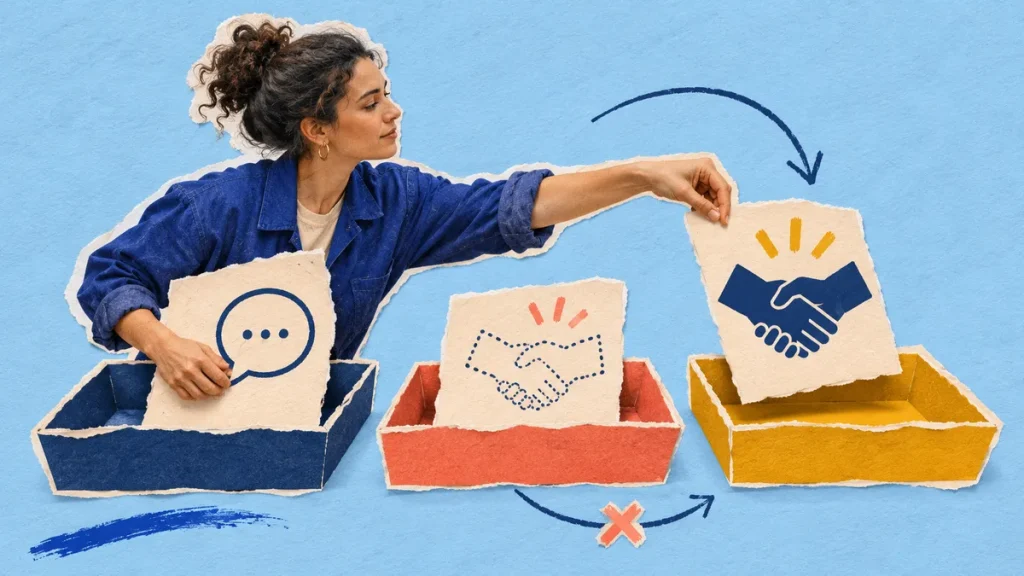
The source note says, “We could move the induction session to Tuesday.” The AI minutes say, “The induction session will move to Tuesday.”
The wording is smoother. It also changes a proposal into a decision.
Preserve the status of the statement
Consider a fictional coworking-space project meeting. Participants discuss several options, express preferences and agree a few actions. The assistant preparing the note needs to retain those differences.
Before drafting, identify explicit decisions, suggestions and questions. Where the source is ambiguous, keep the ambiguity visible for the person who can confirm it.
A confident tone is not evidence of agreement. Neither is a repeated suggestion. The useful question is what the conversation actually established.
Use document sections that support the distinction
A short structure can separate decisions, proposed next steps and points needing confirmation. The labels help the reader interpret the content without decoding the certainty of every sentence.
Give the approved AI tool the relevant notes and ask it to preserve those categories. If the source does not name an owner or confirm a date, the draft should leave that as a question rather than quietly completing the action list.
Do not use the categories to add precision the source lacks. A heading labelled decisions does not make the statements placed beneath it true.
Check the verbs and the attributed actions
Compare phrases such as could, prefers, will and has agreed. Ask whether each change in certainty is supported. Then inspect the person or role named as responsible.
For the Tuesday example, the note can say the move was proposed and identify what still needs confirmation. If the meeting later confirms the change, update the status from that evidence.
Keep the correction close to the relevant item. A general note saying “minutes may need checking” is less useful than a specific question about whether the date was agreed.
Confirm the uncertain item through the normal route
Send the draft through the team’s usual review process. Ask a focused question rather than requiring every reader to reconstruct the entire meeting.
Once the responsible person confirms the point, record the decision and any agreed action. Preserve enough context that a colleague can understand why the wording changed.
Use fictional notes for practice: one explicit decision, one suggestion and one unanswered question. Compare the output with that expected structure before adopting a reusable brief.
The value of meeting notes lies in a faithful working record. A useful AI-assisted draft helps the assistant organise the conversation while leaving the authority to decide with the people who actually make the decision.
Continue with a related working question
Explore Turn Mixed Notes into Documents the Team Can Act On, or read The Summary Is Neat. Where Did the Unresolved Question Go?.
For a written learning option, see the AI at Work with Matze course overview. You provide an approved AI tool and perform the human review.
Review the provider’s course details. Affiliate link: Superstore may earn a commission if you buy.


Discussion 1