Category: Small Business Life

Practical ideas for managing work, time and everyday decisions in a small business.

  • “Could You Just Add One More Thing?” When a Small Request Changes the Project

    “Could You Just Add One More Thing?” When a Small Request Changes the Project

    “Could you just add a booking form?”

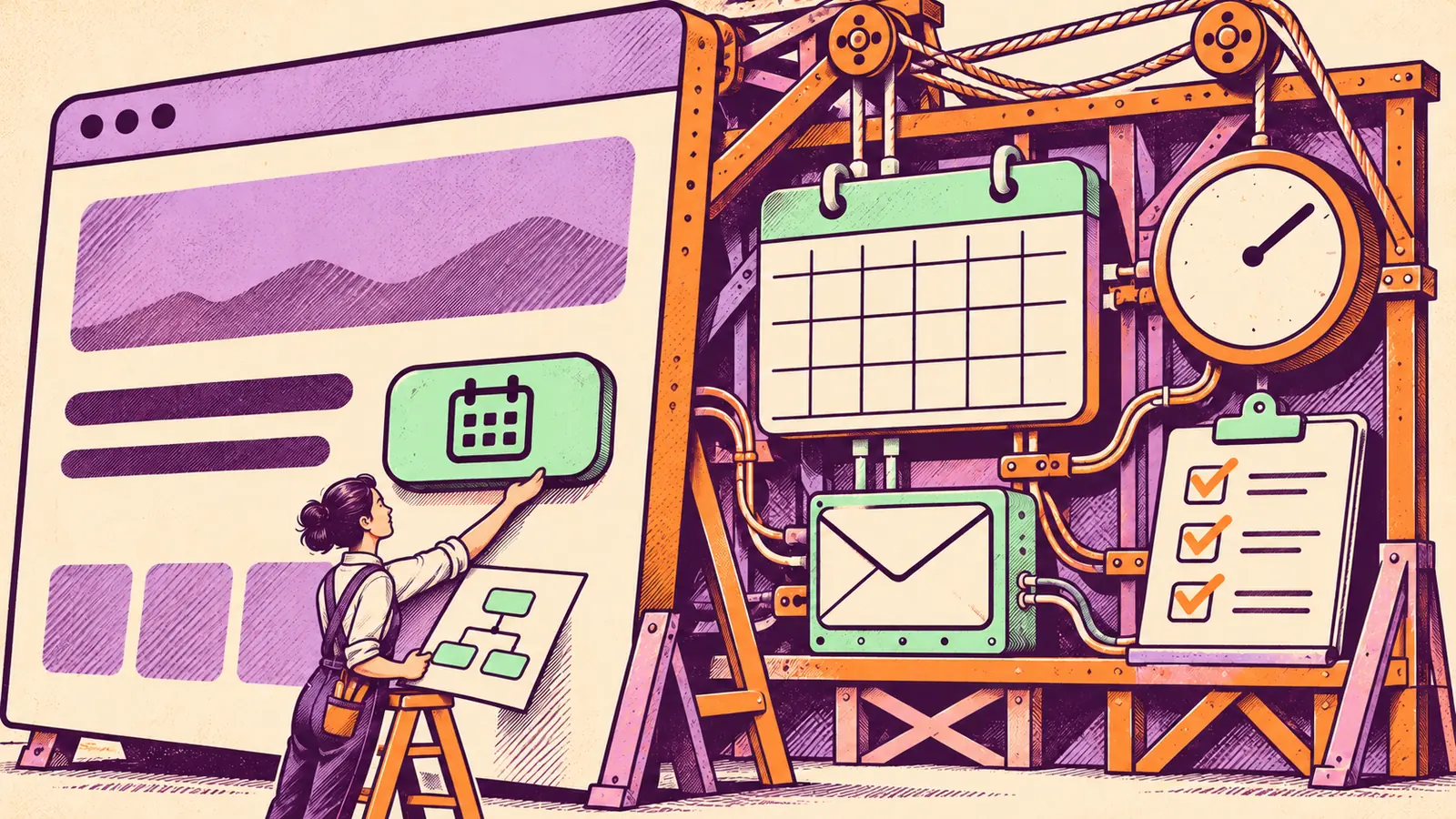
    You are close to finishing a small business website. The pages are approved, the enquiry form works and the client is preparing to launch. A booking button sounds like one more thing you can fit in.

    Then come the questions. Which appointments can people book? Who manages availability? What happens when someone cancels? Who writes the confirmation email and checks that the whole process works?

    The request was one sentence. The extra work is not.

    That does not make it a bad idea. It means you need to decide what changes before you quietly absorb it into the original job.

    A small request is not always a small change

    In this fictional example, an independent web designer has agreed to build a four-page site with a contact form. Adding a booking service introduces a new task for the visitor and a new process for the business.

    The visible button is only part of the work. The designer may also need to configure a service, connect it to the right calendar, agree the messages and test several possible outcomes. The client needs to decide how bookings will be handled after launch.

    This is where scope creep begins: extra work becomes part of the assignment without a clear decision about its effect on the agreed plan.

    The Association for Project Management describes change control as capturing and evaluating proposed changes before approving, rejecting or deferring them. For a small service business, that can be a short conversation and a written note. It does not need a committee.

    Separate a correction from a new request

    Before treating something as extra, check what you actually agreed to deliver.

    If the contact form sends messages to the wrong address because you configured it incorrectly, fixing that is different from adding appointment booking. A promised function that does not work is not automatically an opportunity to charge for more work.

    An agreed revision is different again. Changing a photograph within the planned review may fit the original assignment. Adding a new page, collecting different information or connecting another service may change it.

    Return to the brief, deliverables and review arrangements. If those are unclear, acknowledge the ambiguity and clarify it together. Avoid announcing “out of scope” as though the client should understand a boundary you never explained.

    For future enquiries, our questions to ask before preparing a service quote help establish that shared starting point.

    Make the hidden work visible

    You do not need to describe every technical detail. Explain the parts that affect the client’s decision.

    For the booking request, you might say:

    We can look at adding online booking. Alongside the page change, we would need to agree the appointment types, connect availability, prepare confirmation messages and test the booking process. I will check the additional work and any effect on the launch date before we decide how to include it.

    That response welcomes the idea without committing to an unknown amount of work.

    Before offering a solution, ask why the change matters now. If the client mainly wants fewer scheduling emails, there may be a simpler first step. If online booking is essential to opening the business, it may deserve priority over another part of the site.

    Offer a choice the client can actually make

    There are three useful directions: add the work, exchange it for something else or return to it later. Each needs a clear description.

    Add it to the project.

    I can include the booking setup as an additional piece of work. I will send the proposed scope, fee and revised delivery plan for your approval before starting it.

    Change the priorities.

    If booking matters more than the resources page, we can explore leaving that page out of this phase. I will check whether that gives us enough room for the booking work; it may not be a like-for-like exchange.

    Keep it for the next phase.

    We can finish the agreed website first and plan booking as a separate update. For launch, we would keep the current enquiry route, provided that still meets your immediate needs.

    These are discussion examples, not promises that every change can fit the same budget or deadline. Check the practical consequences before presenting an option as available.

    Keep a change note beside the job

    A useful record can be brief:

    Requested change: [what the client wants]
    Reason: [what it should help them do]
    Effect: [deliverables, preparation, review, fee and timing]
    Decision: [add, exchange, defer or decline]
    Confirmed by: [who agreed, and when]
    Next action: [who does what before work starts]

    Use the approval process you have agreed with the client, then update the working plan. Keep the decision where you can find it, rather than relying on a memory of a phone call.

    If you choose to include a small extra at no additional charge, name it and record it. You can be generous deliberately. You do not need to leave either person guessing about what has become part of the job.

    Watch the total, not just the latest favour

    One small adjustment may be easy to accommodate. Several can change the shape of the week.

    Before accepting another request, look at the changes already agreed. Include the time needed to discuss, implement and review them, plus any work that must be redone. Check what this means for other commitments too.

    The aim is to keep the relationship constructive while making the decision visible. A useful new idea can improve a project. It still deserves an honest conversation about the work behind it.

    The next time you hear “just one more thing,” try answering: “Let me check what that changes, then we can choose how to handle it.”

    That gives you both room to make a better decision.

    The website project and response examples are fictional editorial illustrations. This article offers a practical way to discuss changes; it is not a contract template or legal advice.

  • When Did Running a Small Business Become a Content-Creator Job?

    When Did Running a Small Business Become a Content-Creator Job?

    Imagine a baker who starts the morning preparing fresh bread.

    Before opening the shop, there’s a photo to take. Later, perhaps a short video of the baking process. Someone has suggested that behind-the-scenes content performs well, so packaging orders might become another opportunity to film.

    Then come the captions, comments, messages and analytics.

    The bread still needs baking.

    This is an illustrative example, but the situation behind it is real enough to have attracted academic attention.

    A new study published on November 10, 2026 examines how digital platforms are changing the everyday work of small business owners.

    Its central argument deserves attention: running a small business increasingly involves doing the work of a content creator, whether you wanted that job or not.

    The extra job nobody mentioned

    The study, by Lana Swartz, Maximilian Brichta and Harry Hudome, draws on six years of qualitative research, including 60 semi-structured interviews with small business owners in the United States, some of them follow-up interviews.

    The researchers draw on Sophie Bishop’s concept of influencer creep.

    In simple terms, practices associated with influencers — building a personal brand, producing content, understanding algorithms and maintaining an audience — are becoming part of running many ordinary businesses.

    This isn’t limited to people whose products are digital.

    The research considers businesses across different sectors, including local services, retail and professional work.

    The researchers identify three forms of work that have become increasingly important.

    1. Production work: Your business becomes a content studio

    Taking photos, filming videos, editing clips and creating attractive posts all require time and skills.

    Some owners in the study invested in cameras, software and other equipment. Others learned new creative skills because they felt their online presence needed to look more professional.

    But there’s another, less obvious change.

    Ordinary business activities become potential content.

    Preparing orders, arranging products or carrying out everyday tasks can turn into material for the next post.

    That can be useful. Showing how something is made may help customers appreciate the work behind it.

    The problem begins when documenting the work starts competing with doing the work.

    2. Relational work: More conversations, more places to manage them

    Small businesses have always depended on relationships.

    Digital platforms create additional ways to build those relationships, but they also create more places where customers expect attention.

    Comments, direct messages, reviews and platform interactions can become part of the working day.

    A customer conversation may begin on Instagram, continue through email and end somewhere else entirely.

    Being accessible can be valuable. Being expected to be accessible everywhere is another matter.

    The study identifies this expansion of relationship management as one part of the additional work created by platform-dependent business operations.

    3. Information work: Trying to understand systems you don’t control

    You publish something useful.

    A few people see it.

    Another post, perhaps one you spent less time creating, reaches hundreds.

    Why?

    For many business owners, understanding platform visibility becomes another ongoing task.

    The researchers describe how owners try to interpret algorithms, performance metrics and advice about what supposedly works.

    And the challenge extends beyond social media. Payment systems, scheduling tools and other digital services can introduce additional operational work and dependencies.

    The issue isn’t that these tools are necessarily bad.

    It’s that every tool can bring its own rules, learning curve and maintenance requirements.

    When marketing starts taking over the business

    Here’s the question the research raises for me:

    How much of a small business owner’s working day should be spent making the business visible rather than delivering the value customers came for?

    There isn’t one correct answer.

    For a photographer, designer or content specialist, creating media may be a natural part of the business.

    For a baker, consultant, craft maker or independent service provider, it may be an entirely different skill set.

    And some entrepreneurs genuinely enjoy creating content. The researchers found that experiences weren’t uniformly negative.

    The problem isn’t content creation itself.

    It’s the assumption that every business needs to behave like a media company to remain relevant.

    A more useful question than “What should I post today?”

    If you’re feeling the pressure to publish constantly, it may help to change the question.

    Instead of asking what you should post today, ask:

    What does a potential customer need to understand before they can confidently choose my business?

    That might be something simple.

    A clear explanation of your service.

    A useful answer to a common question.

    An example showing how your product solves a real problem.

    A practical guide that helps someone make a decision.

    These are all forms of content, but they begin with customer value rather than a publishing schedule.

    And some of them can remain useful for months or years.

    Five ways to make content work for your business

    The following are practical suggestions inspired by the research, not interventions tested by the researchers.

    1. Start with questions customers already ask.

    If you repeatedly explain the same thing to customers, that explanation may deserve a permanent place on your website.

    2. Choose fewer places to be active.

    You don’t necessarily need to maintain every social platform. Consider where your customers actually look for information and where you can realistically maintain a useful presence.

    3. Create something worth returning to.

    A practical guide, comparison or checklist may continue helping readers long after publication. That doesn’t guarantee search traffic, but it can create lasting value.

    4. Reuse ideas, not just posts.

    One well-researched article might provide material for a newsletter, a short social update or an answer to a customer question. Adapt the message to the situation instead of simply duplicating it everywhere. This guide to keeping product messages consistent across different content pieces offers a practical starting point.

    5. Measure useful outcomes, not just attention.

    Views and likes can tell you something about reach. They don’t necessarily tell you whether people understand your offer, trust your expertise or become customers.

    Look for signals that connect your content to meaningful business goals.

    You don’t have to become an influencer to be useful

    There’s an important distinction between creating content and building a business around content creation.

    For some entrepreneurs, the second option is exactly what they want.

    For others, content is simply a way to help people discover and understand the work they already do.

    The research reminds us that digital visibility has a cost. It requires time, attention, skills and sometimes money.

    Those resources are limited, especially in a small business.

    So perhaps the goal shouldn’t be to produce more content.

    Perhaps it should be to make each useful piece of content do more meaningful work.

    A good article can answer a question. A clear website can help someone choose. A thoughtful explanation can save both you and your customer time.

    And then you can get back to the reason you started your business.


    Research behind this article

    Swartz, L., Brichta, M., & Hudome, H. (2026). “I’m a small business owner, and unfortunately that means I have to be a content creator”: Platformization and the changing work of running a small business.

    Published online November 10, 2026.

    Read the original research article.

    About the evidence: This is a qualitative study based on interviews, observations and other research conducted primarily in the United States between 2020 and 2026. It helps explain how platform dependence can change small-business work. It does not establish how many businesses worldwide experience these pressures, nor does it test the five practical recommendations above.