Your Best Prompt Lives in a Chat. Can Your Colleague Use It?
Context is part of the task. A portable brief gives the next colleague enough to begin without reading your earlier chat.
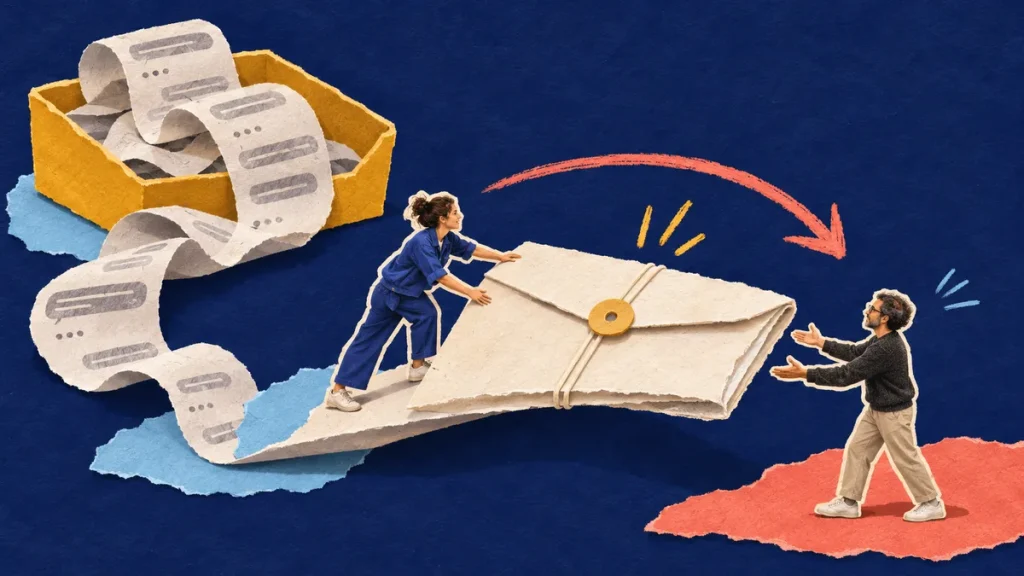
A prompt works beautifully in one conversation. You copy it to a colleague, and the new draft misses the audience, the tone and a practical condition you had already explained ten messages earlier.
The copied words were only part of the brief. The rest lived in the chat.
Extract the task from its conversation history
Imagine a freelance virtual assistant preparing a repeatable writing task for a colleague. Instead of sharing only the successful final prompt, he writes a self-contained brief.
It names the intended reader, the document’s purpose, the approved source information and the required output. It also identifies any conditions that must remain visible and the question the reviewer will check.
A useful brief does not reproduce the whole chat. It carries the context needed for this task without making the next person search a private conversation for essential details.
Separate reusable structure from case information
Some parts may remain stable: the type of document, the intended section structure or the review question. Other details belong to the current case.
Make those variable inputs obvious. A sample customer name, old project date or illustrative amount should not look like a fixed instruction for every future task.
Keep examples clearly marked as examples. If a worked answer is included for learning, explain which features demonstrate the method and which details should be replaced.
Try the brief in a clean start
Use fictional material and let a colleague begin without reading the earlier conversation. Ask them to explain the task before generating a draft.
Do they know who will read it, which source they may use and what the result should contain? Where they need an answer from your memory, improve the brief.
Then review the draft against the stated task. A new conversation need not produce identical prose to be useful. The relevant test is whether it respects the same purpose, information and conditions.
Leave room for the person doing the work
A shared brief should help a colleague recognise a missing input or an unsuitable task. Include a place for questions rather than encouraging them to fill every gap automatically.
Use the organisation’s approved AI tool and normal information-handling arrangements. A portable brief does not require copying confidential conversation history into a new service.
Keep the brief where the team already finds working instructions, with an owner for changes. When a correction reveals missing context, improve that part deliberately.
The transferable asset is an understandable task, not a magic phrase. A colleague can adapt it more responsibly when they can see why each input and requirement belongs there.
Continue with a related working question
Explore Carry the Brief and Human Review into the Next AI Task, or read The Brief Changed Midway. Which Parts of Your AI Draft Need Reworking?.
For a written learning option, see the AI at Work with Matze course overview. You provide an approved AI tool and perform the human review.
Review the provider’s course details. Affiliate link: Superstore may earn a commission if you buy.

Discussion 0
What did this article make you think about?